

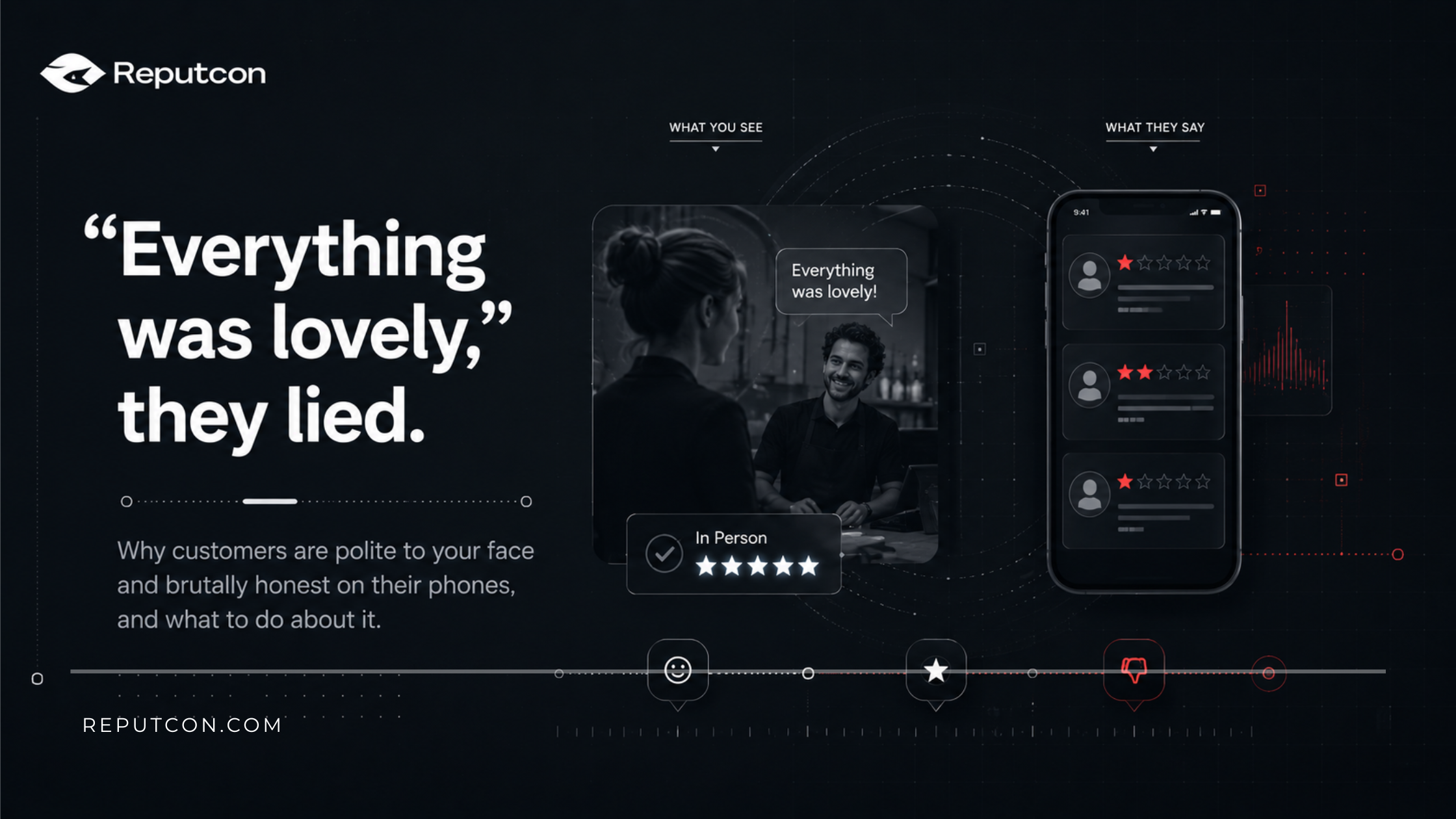
They Smiled, Said Thanks, and Left You Two Stars
Ask anyone who’s worked a floor and they’ll tell you the same thing.
The customers who complain to your face are rare, and getting rarer. What you get instead is the nod. The “yeah, all good thanks.” The smile on the way out. And then, sometimes, hours later, the review that reads like it was written by a different person who had a completely different evening.
It feels like a betrayal the first time it happens. You want to chase them down the street going “you said it was FINE.” But here’s the thing: they weren’t lying to hurt you. They were just doing what humans do now.
Complaining to someone’s face is socially horrible. Always has been. You have to look a real person in the eye, in their place of work, and tell them their thing wasn’t good enough, and then keep sitting there while they process it. Most people would rather eat the cold chips than have that conversation. So for decades, all that honest feedback just quietly died in people’s heads on the drive home, and you never heard a word of it. You thought you were doing great, because everyone said “lovely, thanks.”
Then the phone happened. And the phone changed the entire emotional maths of complaining.
A screen removes the person. There’s no eye contact, no awkward pause, no manager’s face falling. It’s just you, alone, tapping honest words into a glowing rectangle while the feeling is still fresh. All the friction that used to keep complaints politely bottled up is gone. So the truth that used to evaporate on the drive home now lands, permanently, publicly, on your Google listing, for the next thousand customers to read.
This is worth sitting with, because it flips how you should think about the whole thing. Your reviews are not your customers being harsh. Your reviews are your customers being honest for the first time. That two-star about the cold chips is the feedback they were too polite to give you at the table. It’s not an attack. It’s the message finally getting through.
Which means two things, and they matter.
The first is that you have to stop trusting the smile. The nod at the till is not data. It’s manners. It tells you nothing about whether they’ll be back, and it certainly doesn’t tell you what went wrong. The place that only listens to the faces in the room is flying blind, because the faces are being polite. The truth left with them and turned up online three hours later. If you want to know how you’re actually doing, the reviews are where the honest version lives now, not the dining room.
The second is more useful. If people won’t tell you to your face but will tell a screen, then give them a screen while they’re still with you. This is the whole quiet genius of a feedback prompt at the table or the till, a little “how did we do” they can tap on their own phone before they’ve left. Same person, same honesty a screen unlocks, except now you’re catching it while they’re still in the building and you can actually do something. The cold chips become a fresh plate and an apology instead of a two-star you read the next morning and can’t undo. You’re not stopping the honesty. You’re just getting to it first.
The old world let you believe everyone was happy because everyone was too polite to say otherwise. That world is gone. People will tell the truth now, they’ll just tell it to their phone instead of your face, and the only real choice you’ve got is whether you hear it while they’re still sitting there, or read it later with everyone else.